SUPA study- Chapter II: A summary of trends and key stakeholder sourcing policies
The EU is reliant on imports to meet its demand for fish and seafood. “For the EU as a whole, fish dependence day is now 8 July (2013), indicating that almost one-half of fish consumed in the EU is sourced from non-EU waters.” For example, figures from 2011 show imported species such as Alaska pollock, tuna and Pangasius contribute to 40.3% of total fish consumption in Germany. Another example would be in the Netherlands where tuna was listed 2nd followed by Pangasius as 3rd for volume in 2012. 

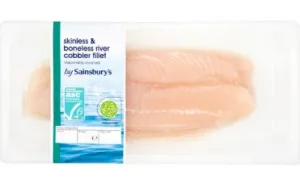
pangasius-sainsbury-cobbler635209677514227373

With the EU population (27 countries) estimated to increase from 501,044,066 in 2010 to 522,342,413 in 2030, this represents an additional market of 21,298,347 which is almost the equivalent of the 2010 populations of Belgium and Greece combined.4 When the FAO forecasted growth of 2 kilos in per-capita- consumption from 22 to 24 is factored in, Europe will continue to represent an important marketplace for fish and seafood products.

However, FAO’s Globefish summed up the current Pangasius situation in Europe as follows in their June 2013 Pangasius market report:

Eurostat reports that in 2012 the EU imported 22% less pangasius than a year ago totalling 143 200 tonnes at a value of USD 376 million, down 24% from 2011. The average import price also weakened by 2.4% to USD 2.63/kg in 2012. The largest markets in the EU were Spain, the Netherlands, Poland and Germany; all of them experienced declines in imports from Viet Nam. However, several markets within the EU showed positive growth; these are Belgium, Greece and Latvia.

Against this backdrop, there have been other positive developments.

In Germany (highlights added):

“Although imports into the German market declined in 2012, pangasius remains popular among consumers. It is the fifth most consumed fish in Germany. Recently pangasius products bearing ASC certification have been available on the market. The certification recognises farms that subscribe to farming in a responsible and environmentally friendly manner. The first pangasius products to obtain the ASC label come from 13 certified farms in the Mekong Delta area in Viet Nam. Together they are responsible for 10% of total production. Products with this label are now available in many supermarkets across Germany. Brands and companies, such as Topsea, Frosta, Femeg, Queens and Profish, offer pangasius products with the ASC logo.”

In France (highlights added)

“Carrefour has been actively improving the quality of its seafood products for over 10 years. Aware of the global urgency to preserve marine resources and to safeguard the future of the industry and its immense workforce–200 million people rely on the seafood chain production–Carrefour has pledged its contribution to the sustainable consumption of fish products.

To achieve its goal, Carrefour has created a large offer of fresh and frozen seafood products that incorporate environmental concerns and are certified against high quality standards. One example is that all their fresh and frozen pangasius (freshwater catfish) is GLOBALG.A.P. certified.

As part of its policy to preserve transparency and provide information to its consumers, Carrefour will actively link its customers to the GLOBALG.A.P. aquaculture consumer website, which has been set up as part of GLOBALG.A.P.’s consumer awareness campaign.

Starting in 2013, Carrefour will print the website address www.mon-poisson.info directly on the packaging of all frozen 3angasius available in Carrefour’s supermarkets in Europe and sold under Carrefour’s own brand. The aquaculture site will give Carrefour customers information on the Good Aquaculture Practice that GLOBALG.A.P. certifies. Customers will also be able to find the exact farm origin of the fish they eat. They can do this using the GGN on the packaging, the 13-digit unique number that GLOBALG.A.P. assigns to each certified producer. This data is available on the GLOBALG.A.P. Database and searchable via a public search tool, which has been added to the aquaculture consumer website.”

In the UK (highlights added):

“Sainsbury’s will be the first major retailer in the UK to launch Aquaculture Stewardship Council (ASC) certified River Cobbler from this week. Farmed in South East Asia, this white fish is a step towards more responsibly farmed alternative fish being available in the supermarket.

The fish, which is an alternative to Cod and Haddock, is native to the Mekong Delta and has been commercially farmed there since early 2000. Sainsbury’s has been working with ASC since 2011 to ensure the fish from Vietnam can be certified. The process involves assessing the comprehensive environmental and social criteria as set by ASC standard – this includes the need to conserve local biodiversity and impact on the local communities. Of particular importance is to ensure the feed used is sourced from known and sustainable sources.”

Additionally, the European Rapid Alert System for Food and Feed showed a decline in notifications regarding Pangasius raised in Vietnam from 24 in 2010 to 4 in 2012. During the same timeframe border rejections were reduced from 14 to 2.

European retailer sourcing policies often involve input from the international NGO community.

The sourcing policies developed by retailers often include commitments to aquaculture certification schemes. Within Europe there are 5 primary aquaculture certification schemes to choose from: the Aquaculture Stewardship Council (ASC); Friend of the Sea (FOS); the Global Aquaculture Alliance (GAA); GlobalG.A.P. and organic schemes (whether EU or other). On the ASC’s “Partners and Supporters” webpage the following European retailers are listed as supporters: Ahold (the Netherlands); Metro Group and Edeka (Germany); and Migros (Switzerland). Friend of the Sea lists suppliers of certified product in Europe on their website. For Pangasius, 3 suppliers are listed serving greater Europe, these suppliers are based in the Netherlands and Switzerland.13 The GAA website features a webpage devoted to market endorsers. European retailers listed include among others: Aldi UK, ASDA, The Co-operative, Morrisons, Tesco and Waitrose (UK); Delhaize (Belgium); Metro Group and Rewe (Germany). GlobalG.A.P. has a number of European retailers serving on their Aquaculture Technical Committee these include: Aldi Süd, Metro Group and Rewe (Germany); El Corte Inglés (Spain); Aldi UK, ASDA, Morrisons, Sainsburys and Tesco (UK); Ahold (the Netherlands) and Carrefour (France and Spain).

The European marketplace is highly consolidated and comprises the overwhelming majority of the top 25 retailers globally.

Seafood sustainability uptake varies by retailer and country. Some retailers incorporate seafood sustainability as a part of broader initiatives such as the UK retailers Marks & Spencer Plan A or the Sainsbury’s 20 by 20 Sustainability Plan. Other retailers, such as Rewe (Germany) have developed their own proprietary label – Pro Planet to communicate sustainability.

Retailers sourcing criteria for aquaculture products can exceed a single certification scheme scope. Key issues encountered were animal health and welfare, feed free of GMO ingredients and traceability.

Finally, A new initiative the Global Sustainable Seafood Initiative (GSSI) has been launched to help retailers assess certification schemes with the following mission and objectives.

GSSI Mission: 

The mission of GSSI is to deliver a common, consistent and global bench-marking tool for seafood certification and labelling programs to ensure confidence in the supply and promotion of sustainable seafood to consumers worldwide as well as promote improvement in the certification and labelling programs.

GSSI Objectives

–       Creating an internationally agreed set of criteria and indicators to measure and compare the performance of seafood certification and labelling programs, in order to facilitate their implementation and use;

–       Providing an international Multi-Stakeholder Platform for collaboration, and knowledge exchange in seafood sustainability; and

–       Reducing cost by eliminating redundancy and improving operational efficiency of seafood certification and labelling programs, thereby increasing affordability and flexibility within the supply chain.

GSSI is currently in the development phase with the goal of being fully operational by 2015. A number of European stakeholders are directly involved in the initiative.

Study on market potential of sustainably produced Pangasius in Europe

Project: Establishing a Sustainable Pangasius Supply Chain in Vietnam

Author: Carson Roper, Independent Consultant

Contracted by: WWF Austria

Source: pangasius-vietnam.com

Policies for Sustainable Products


istock_000004051899large__edit_

 Source: ringway.co.uk

How can policy support sustainable products? This questions was discussed at three workshops in Vietnam, Cambodia and Laos hosted by the project Sustainable Product Innovation. With the workshops the project aimed to raise awareness of sustainable products and the benefits that sustainability criteria in the production process and design phase can have on the national economy.

To support the development of policies and incentives that will foster the apparition of a market for sustainable products, the project conducted policy assessments in the three countries.The assessment analysed how existing laws, regulations and strategies relate to sustainable products. The assessment identified which state actors are involved when policies to promote sustainable products are drafted and implemented. For all three countries it became clear that Governments would play a vital role in promoting sustainable production and sale when stimulating demand for sustainable products and create a market for them.

For Laos, the project recommends to develop a National Action Plan on Sustainable Products including a National Foundation for Sustainable Products. The Action Plan would contain Sustainable Public Procurement Guidelines and Financial Incentive for Promotion of Sustainable Products. For Vietnam, the project suggests a National Sustainable Products Innovation Taskforce. Furthermore, a National Foundation for Sustainable Products should be established with a National Programme on Promotion of Inclusive Sustainable Products and a Financial Scheme for Sustainable Product Innovation. In Cambodia the project envisions a National Sustainable Product Innovation Foundation and a Task Force on Sustainable Products. Both agencies should develop the future National Sustainable Products Innovation Policy.

These activities are a component of the EC funded SPIN-VCL project being carried out in Vietnam, Lao PDR and Cambodia.

Available at http://www.switch-asia.eu

SUPA Study-chapter I: Sustainable pangasius market potential in Europe

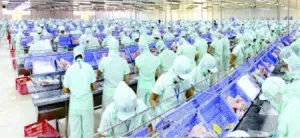
pangasius-processing-3635203670882327757

Chapter I – European Seafood Market Summary and Recommendations – Feedback from the retailer interviews overwhelmingly stated that while both retailers and customers were not willing to pay more for certification, they were willing to pay more for quality. This did not mean that certification was any less important in reducing risk or building brand credibility. Explore how responsible practices at the farm and processing level contribute to improved quality.

Introduction:

The objective of the SUPA market analysis project was threefold: to gain insights into the European market perceptions of the Pangasius industry in Vietnam; conduct an analysis of key market players and trends in the European market and based upon this information generate recommendations for improving the image of Pangasius from Vietnam to increase either the volume sold or value per unit in Europe.

The image of Pangasius in Europe:

The image of Pangasius in Europe among retailers has been impacted by negative media reports and the campaigns waged by competitive interests in individual markets. In general, the Pangasius industry is viewed as massive, production driven and resulting in negative impacts.

The European market, key players and trends:

The European market will grow from a 2010 population base of 501,044,066 to a forecasted 522,342,413 in 2030.1 This growth is approximately equal to the addition of 2 countries with the same population as Belgium and Greece (using 2010 population figures). At the same time, per-capita consumption of fish will increase 2 kg from 22kg to 24 kg per-capita.2 Against this backdrop is the fact that Europe is highly dependent on imports to meet demand and will continue to depend on fish and seafood imports into the foreseeable future.

The European retail market is highly consolidated and constitutes the overwhelming majority of the top 25 retailers globally.

The primary markets for Pangasius in Europe are in descending order: Spain; the Netherlands; Germany and the United Kingdom. Desktop research revealed through CSR initiatives and seafood sourcing policies, European retailers have choice-editing agendas in place. Choice-editing entails the limiting of products offered to customers based on environmental, social and/or other considerations. The effect of choice-editing with aquaculture products (and Pangasius in particular) varies by country and retailer.

Spain, Germany, France and the United Kingdom provide attractive markets for (re) development of Pangasius sales. “Whitefish” sales (including Pangasius) in Spain have suffered due to the financial crisis and therefore should increase with an economic rebound. Spain is also attractive due to its trade with Portugal. A television documentary aired in Germany in 2011 directly impacted Pangasius sales in Germany, Austria and Switzerland. Since then Germany has experienced strong uptake of the ASC label, to help rebuild consumer trust.

France has also experienced a decline in Pangasius sales due to negative media reports, but as the largest consumer of fish and seafood in Europe is a key market. Finally, in the United Kingdom certified Pangasius is beginning to gain market recognition. All of these markets hold promise for increased Pangasius sales based on an improved image.

For Pangasius from Vietnam, European retailer purchasing decisions are predominantly influenced by the following considerations: quality, price and service; food safety; social considerations; environmental impacts; animal health and welfare and traceability. Each one of these determinants help to reduce the retailer reputational risk associated with products. Quality, food safety or other product issues such as social considerations, environmental impact or animal health and welfare are often addressed through certification platforms and schemes. In the case of quality an example would be the “Label Rouge” label in France. Food safety is addressed through the Global Food Safety Initiative platform. Other considerations are addressed through aquaculture certification schemes such as: the ASC; GlobalG.A.P.; the Global Aquaculture Alliance BAP program; Friend of the Sea and organic schemes.

Promoting and protecting an individual retail and supplier brand identity is extremely important in highly consolidated markets such as the European marketplace. Retailers and their suppliers have developed campaigns to message the integrity of their brands to reduce risk. Examples include:

– Marks and Spencer’s Plan A “Forever Fish” campaign in conjunction with the Marine Conservation Society and WWF (UK)

– The Young’s (and Findus) “Fish for Life” campaign (UK headquartered)

– Iglo Foods “Forever Food” campaign (UK headquartered)

– The Edeka partnership with WWF for sustainable fisheries (Germany)

Additionally, other programs are used to strengthen retailer brand identity at the product level through signage and labels:

– In the UK: ASDA’s low price guarantee

– In Germany: Edeka’s use of the ASC label

– In Spain Auchan’s “Producción Controlada” label

– In the Netherlands: the use of a stoplight system at Plus

– And in France: Carrefour’s label stating the product was raised on feed free of GMO ingredients (<0.9%).

Here the ultimate objective is to enhance product credibility. And while study results vary, market feedback is clear…consumers are confused by multitude of product labels. Thus this research identified a growing trend to focus on first on building brand reputation through easily understood consumer messaging e.g. price and/or quality and where necessary or applicable enhance the brand reputation through product credibility messaging with either internal labels or external labels.

What about the image of Pangasius products from Vietnam? First, for Pangasius from Vietnam there is good news in European market. Pangasius from Vietnam has a strong presence in the European retail marketplace. Additionally, Pangasius from Vietnam is perceived as: affordable; mild flavored; boned; and easy to prepare. Pangasius from Vietnam also has reputational problems associated with quality, food safety, social and environmental concerns as well as animal health and welfare. Addressing these issues is important because they determine the degree of market access in Europe.

In recent years a great deal of effort has been put into acquiring various certifications to improve the image of Pangasius and enhance its reputation, but is it as simple as “ticking the box”? It is important to understand that aquaculture certification schemes do not guarantee market access. They are simply a tool to facilitate market access. Secondly, certification schemes are not a guarantee of a premium at the farm, processor or retail level. This is especially true in the highly competitive European national markets (France, the United Kingdom and Germany).  Thus aquaculture certification needs to be integrated into an overarching market approach to build a new image of certified Pangasius in the European marketplace as a quality source of protein which enhances brand and product credibility.

To improve the image of Pangasius from Vietnam in the European market the following recommendations are made:

– Choice-edit or be choice-edited – Understand how farm and processing practices are perceived by European retailers. This requires constant monitoring of retailer policies and key issues driving those policies.

– Recognize the economy influences, but does not determine the fate of the Pangasius industry in Europe. If Pangasius is truly a price driven product in Europe, sales should increase during economic downturns.

– Identify how Pangasius can reduce retailer risk and increase brand credibility and branded product credibility.

– Identify a balance between production driven agendas and marketing agendas for Pangasius.

– Be proactive on issues such as GMO free feed ingredients and animal welfare.

– Communicate positive news – feedback from retailer interviews included a need for communication advancements at the farm and processing level. “Pangasius has a poor reputation, perhaps unfairly so”, said one retailer. Another retailer stated, “much has changed in the last 3 years, where is the positive news?”

Final recommendation:

Feedback from the retailer interviews overwhelmingly stated that while both retailers and customers were not willing to pay more for certification, they were willing to pay more for quality. This did not mean that certification was any less important in reducing risk or building brand credibility. Explore how responsible practices at the farm and processing level contribute to improved quality.

SUPA Study on market potential of sustainably produced Pangasius in Europe

Project: Establishing a Sustainable Pangasius Supply Chain in Vietnam

Author: Carson Roper, Independent Consultant

Contracted by: WWF Austria

Source: pangasius-vietnam.com

EU supports funding of sustainable catfish supply chain in Vietnam

 A new project to establishing a sustainable pangasius supply chain in Viet Nam (SUPA) has been launched by the Viet Nam Cleaner Production Centre (VNCPC) and the Viet Nam Association of Seafood Exporters and Producers (VASEP).

 The project is worth €2.4 million, of which the European Union finances €1.9 million under the EU SWITCH-Asia Programme. The project is implemented by VNCPC in partnership with VASEP, WWF-Vietnam and WWF- Austria, reports VASEP.

Speaking about the project, Ms Berenice Muraille, Development Counselor of the Delegation of the European Union to Viet Nam said: “The project intends to improve the competitiveness of Viet Nam’s Pangasius industry in the global market. Through this project, EU directly supports the entire Pangasius supply chain from hatcheries, feed producers and processers in Vietnam to traders and end-use customers, including those in the EU which is the largest market for Viet Nam’s pangasius export”.

The four year long project, running from 2013 to 2017, will focus on capacity building, promotion of responsible production to increase product quality, mitigation of environmental impacts and reduction on production costs by applying Resources Efficiency and Cleaner Production methodology, product innovation and market development and promotion.

The project also supports information exchange, techniques for households and small and medium enterprises (SMEs) in applying the current sustainable standards as Aquaculture Stewardship Council (ASC), Global GAP, etc, towards sustainable production aimed to increase the competitiveness of the Pangasius sector in the world market.

“SUPA is one of the supporting projects for Viet Nam’s Pangasius sector, which not only approaches from supply chain viewpoint but also applies “PUSH” and “PULL” methods for activities such as sustainable production and market promotion. It also includes the application of research results into practice,” Dr Tran Van Nhan, Director of VNCPC, emphasised.

It is expected that by the completion of the project, at least 70 per cent of the targeted middle to large Pangasius producing and processing enterprises, together with 30 per cent of the feed producers and small independent production SMEs will be actively engaged in Resources Efficiency and Cleaner Production (RE-CP), and at least 50 per cent of targeted processing SMEs will be provided with sustainable products compliant with the ASC standard to EU and other markets.

TheFishSite News Desk (available at http://the fishsite.com)

Innovative methods, capacity for sustainable future in Vietnam

On November 14th 2013 – at Press Club, SPIN project successfully organized the workshop “Product Innovation – Key to Sustainable Future” which welcomed nearly 100 participants and press agencies. The workshop brought up an overview of current situation, challenges and opportunities in product innovatiôn in Vietnam for enterprises and national policies. 

9

The workshop was pleased to have enterprises representatives who have involved in SPIN project in the last 4 years, along with representatives from related authorities, NGOs active in in sustainable development and national reporters.

At the workshop, Dr. Marcel Cruel – TUDelft and Mrs. Nguyen Thi Bich Hoa – Vice-director of AIT-VN – reported the methodology, capacity of Vietnam enterprises in product innovation progress. Moreover, two representatives from two most successful co-operated enterprises with SPIN presented on their own stories regarding products innovation as well as awareness raising in this field. 

Specifically, it is labeled Hoa Ban+ of Thuan Hoa social protection center specializing in providing garment handcrafts bearing deep ethnic culture in each product as well as proving the existing contemporary, innovative products. The second is the Enterprise Manufacturing Corporation Investment Services Binh Dinh Import Export (PISICO) who has been raised awareness about the efficient use of resources and recycling material waste in the production process to make new, unique and innovative interior products, which has helped reduce emissions to the environment and material waste.

anh 5-khai truong sr

Mr. Nguyen Hong Long – regional coordinator of SPIN project – presented with the specific results of SPIN after almost 4 years of operation – Green Street – located at 45 Bat Su, Hanoi. The project believes that Green Street is the truest testament to a sustainable future in Vietnam at the present time and in the future, when Vietnam businesses are to raise  their awareness and capacity together with support of government policies, the future of sustainability will beno longer unthinkable.

The workshop ended, the audience visited Green Street and I-Nature knowledge farm to feel and experience sustainable products of corporates in  Vietnam.

Available at http://scp.vn

Three SPIN enterprises attend as speakers in EcoAP 15th forum on cutting waste

On November 12th 2013, at Hilton Opera Hanoi hotel, the 15th forum of Eco-innovation Action Plan was organized with the theme Cutting waste…Resource efficiency and eco-innovation for sustainable food chains. At the forum, SPIN consultants who have worked with Vietnam enterprises attended to share their challenges and opportunities in 3 sub-sectors: Food processing, Packaging and Retail.  

1

Dr. Marcel Cruel at the forum

There are 4 consultants from SPIN project attending the forum, including: Dr. Marcel Cruel (Delft University of Technology), Mr. Nguyen Hong Long – representing GreenChoice company, Mr. Tran Duy Long – representing VietLien Group and Mr. Doan Minh Quang – reprensenting I-Nature Knowledge Farm. The spearker held palarell roundtable discussions on 3 sub-sectors mentioned in Vietnam enterprises to find a new creative way to cut down food waste in Vietnam in particular and worldwide. At these discussions, speakers and representatives of enterprises, government and NGOs in Vietnam and other countries sat down to share their difficulties, exchange knowledge and lesson learned to improve the situation in their own countries.

11

Mr. Tran Duy Long – representing Viet Lien Group – share food packaking and preserving

111

Mr. Doan Minh Quang – representing I-Nature – present food processing

 The forum was organized to address an urgent and practical global issue – food. According to Food Agriculture Organization (FAO), food waste has occupied up to 1/3 of the amount of food produced for human demands, which causes 750 millions USD losses every year. Resources have become exhausted, world population has increased and global warming has caused negative impacts; all of these factors will exacerbate current market conditions regarding the balance of supply and demand.

Despite the fact that the amount of food produced all over the world has exceeded world population’s demand in 2013, approximately one million people are suffering from starving and two million people have malnutrition.

Food manufacturers of locals, regions and worldwide now have the opportunity to adjust their strategies and turn market challenges into opportunities by eco-innovation and creative methods to access to new market segments, improve technical capacity and profitability for businesses.

The EcoAP 15th Forum is co-organized by United Nations Environment Program (UNEP) and European Commision in collaboration with Ministry of Agriculture and Rural Development and Vietnam Chamber of Commerce and Industry.

News available at http://scp.vn, November 2013