Posts

VNCPC shares RECP solutions with enterprises in Dong Nai
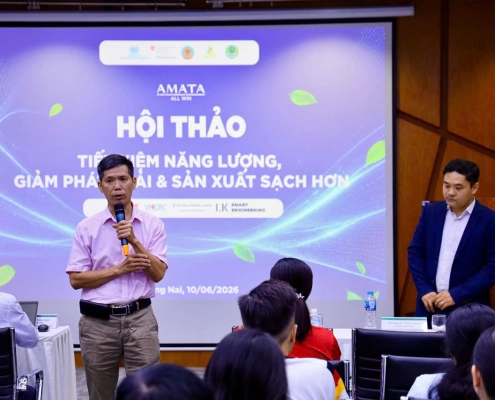
On the morning of June 10, 2026, at the Amata Service Center (Amata Industrial Park (IP), Dong Nai City), Amata Bien Hoa Urban Joint Stock Company successfully co-organized the Workshop on “Energy Saving, Emission Reduction and Cleaner Production” in collaboration with the Management Board of Industrial Parks and Economic Zones of Dong Nai City, the United Nations Industrial Development Organization (UNIDO), and relevant specialized units.

The workshop attracted more than 60 delegates from 42 enterprises operating inside and outside the Amata IP, along with representatives from regulatory agencies, technical experts, and organizations supporting businesses in the fields of environment, energy, and sustainable development.

The workshop attracted more than 60 delegates from 42 enterprises operating inside and outside the Amata IP

Updating trends and new requirements for sustainable development

In the context where requirements for greenhouse gas emission reduction, efficient resource use, ESG (Environmental – Social – Governance), Net Zero, and circular economy are increasingly becoming key criteria for business operations, the workshop was organized to help enterprises stay updated on new regulations, green development trends, and practical solutions to enhance their competitiveness.

This is also one of the activities contributing to the transition roadmap of the Amata IP toward an eco-IP model, in line with the Government’s sustainable development policy and Vietnam’s Green Growth strategy.

Practical topics tailored for businesses

The workshop program featured a range of in-depth content presented by partner organizations and leading industry experts.

Experts provided a wealth of in-depth and practical knowledge for businesses

Key topics included:

  • Roadmap for transforming existing IP into green and eco-IPs in Dong Nai;
  • Co-processing technology and environmentally friendly waste treatment solutions;
  • New regulations on greenhouse gas emission reduction, ozone layer protection, and refrigerant management;
  • Energy management and chiller system optimization in enterprises;
  • Resource Efficiency and Cleaner Production (RECP) – solutions for enhancing production capacity and sustainable development.

Through presentations by representatives from INSEE Vietnam, MZ VINA, Long Khang Engineering, and the Vietnam Cleaner Production Center Co. Ltd. (VNCPC), enterprises gained access to practical experience and proven solutions from implementations in industrial parks and manufacturing facilities.

RECP – The key to improving production efficiency and reducing emissions

At the workshop, VNCPC’s representative delivered a session on “RECP: The key to enhancing production capacity and sustainable development.” The content focused on challenges that enterprises are currently facing, including rising energy costs, increasing pressure to comply with stricter environmental regulations, and market demands for green products.

Mr. Dinh Manh Thang, senior expert from VNCPC, presenting RECP approaches

Expert Dinh Manh Thang introduced the RECP approach as a comprehensive preventive strategy aimed at improving the efficiency of raw material, water, and energy use; reducing waste generation; and minimizing environmental impacts at the source. RECP not only helps enterprises reduce production costs but also enhances their competitiveness, improves corporate image, and meets future sustainable development requirements.

In addition, real-world examples of energy savings, compressed air loss reduction, production system optimization, efficient water use, and industrial symbiosis were shared to help enterprises better visualize opportunities for improvement that can be applied directly at their facilities.

Lively discussions and sharing of practical experience

One of the highlights of the program was the direct Q&A session between enterprises and experts. Many questions relating to energy management, greenhouse gas inventory, water conservation, new legal requirements, and emission reduction solutions were discussed actively.

Business representatives raised numerous questions for the experts

Through practical exchanges, enterprises gained additional information, experience, and direction to gradually implement activities aimed at improving resource efficiency, reducing emissions, and enhancing production performance at their own facilities.

The workshop is one of the activities contributing to the green transition of the business community in Dong Nai, working toward sustainable development and improved competitiveness in the new context.

VNCPC

Optimizing productivity for green and sustainable manufacturing

Amid rising input material costs and increasingly stringent sustainability requirements, Vietnamese enterprises are facing a new challenge: optimizing productivity while greening production. Rather than viewing productivity and environmental performance as separate objectives, integrating these two factors is becoming a critical management solution that helps businesses enhance competitiveness and achieve sustainable development.

  1. Productivity and green production: Two sides of the same coin

For many years, businesses have focused on increasing output, reducing labor costs, or improving operational efficiency, while environmental issues have often been managed separately. However, experience has shown that when production processes are optimized and waste is minimized, the consumption of energy, water, and raw materials can also be significantly reduced.

This is where productivity and green production intersect: businesses can simultaneously lower costs and reduce their environmental footprint.

  1. Resource savings through operational efficiency

A standardized operating process can generate substantial benefits for both economic performance and environmental protection.

Reducing energy consumption: When machinery operates at the appropriate capacity and production schedules are organized efficiently, idle running and inefficient operations can be minimized. This enables businesses to significantly reduce electricity costs, which often account for a large share of overall production expenses.

Optimizing water use: In industries such as textile dyeing, food processing, and agricultural product processing, the adoption of water-saving technologies, water reuse systems, and leakage control measures not only lowers operating costs but also demonstrates corporate responsibility toward natural resources.

  1. Reducing defect rates – protecting the environment through quality

Effective quality control is one of the most practical ways to reduce environmental pressure. When product defects and material losses are minimized, businesses can use raw materials more efficiently, reduce waste generation, and lower waste treatment costs.

Continuous improvement tools such as 5S, Kaizen, and ISO 9001 quality management systems help businesses prevent defects at the source, improve production efficiency, and establish a strong foundation for sustainable green development.

  1. Toward a circular economy

Rather than maintaining the traditional “take-make-dispose” model, many businesses are transitioning toward a circular economy. By utilizing by-products as inputs for other processes, reusing materials, or collaborating with recycling partners, companies can extend resource lifecycles, reduce environmental pressures, and create additional value streams.

This is not only an environmental solution but also a long-term strategy that helps businesses reduce dependence on virgin raw materials and improve resilience against market fluctuations.

  1. An essential requirement of the global marketplace

Green productivity is no longer an optional initiative – it is rapidly becoming a business necessity. Major export markets are imposing increasingly stringent requirements related to environmental performance, carbon emissions, resource efficiency, and product traceability.

Businesses that integrate productivity goals and sustainability objectives into their operational strategies at an early stage will gain significant advantages in terms of cost efficiency, product quality, and competitive positioning in international markets.

It is clear that productivity optimization not only enables businesses to operate more efficiently but also serves as a key driver of green production and sustainable development. As every process is improved, every resource is utilized more effectively, and every form of waste is reduced, businesses move closer to achieving sustainable growth in the green economy era.

VNCPC

Why should businesses transition to a circular economy?
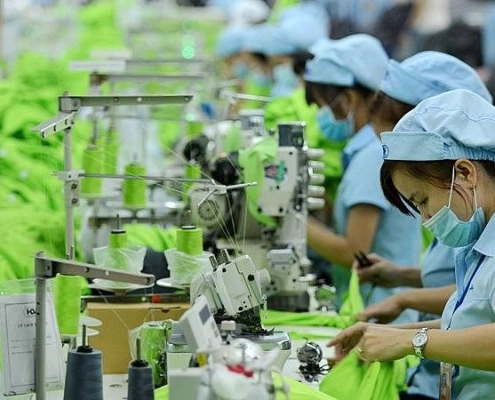
As the global economy faces increasing pressure from resource scarcity, climate change, and increasingly stringent regulatory requirements, the traditional linear economic model of “take – make – consume – dispose” has revealed significant limitations. In contrast, the circular economy is emerging as an inevitable pathway, enabling businesses to optimize operational performance while creating long-term sustainable value.

Below are the key reasons why businesses should accelerate their transition toward a circular economy model.

  1. Addressing Resource Scarcity Challenges

Demand for raw materials continues to rise, while many non-renewable resources are gradually being depleted. This trend drives up extraction, procurement, and transportation costs, directly affecting business profit margins.

At the same time, dependence on imported raw materials exposes companies to supply chain disruptions and geopolitical uncertainties. A circular economy enables businesses to reuse materials, by-products, and waste generated during production, transforming the “output” of one process into the “input” of another. As a result, companies can reduce reliance on imports and gain greater control over production and business planning.

  1. Enhancing Operational Efficiency and Optimizing Costs

One of the most evident benefits of the circular economy is its ability to generate direct economic value. Rather than viewing waste as a cost burden, this model treats it as a valuable resource that can be recovered and utilized.

    • Reducing production costs: Reusing materials, improving energy efficiency, and minimizing waste help businesses significantly reduce operating expenses, waste treatment costs, and logistics expenditures.
    • Addressing overproduction: The circular economy encourages improved product design, focusing on quality and product lifespan, thereby reducing overproduction in a context of limited resources.
    • Extending asset lifespan: Through maintenance, repair, refurbishment, and remanufacturing, businesses can prolong the useful life of machinery, equipment, and materials, maximizing the value of their investments.

One of the clearest benefits of the circular economy is its ability to generate direct economic value.

  1. Meeting Environmental and Climate Commitments

Greenhouse gas emissions and environmental pollution are global challenges. Transitioning to a circular economy is a critical step for businesses seeking to contribute to the achievement of Net Zero emissions by 2050.

This model helps reduce environmental impacts from the design stage onward by:

    • Using renewable energy and environmentally friendly materials;
    • Minimizing waste and eliminating polluting materials;
    • Protecting ecosystems and biodiversity.

Beyond environmental benefits, these efforts also help businesses build a green brand image, enhance corporate reputation, and strengthen trust among customers and communities.

  1. Strengthening Competitiveness and International Integration

In today’s economy, competitive advantage is no longer based solely on cost but increasingly on sustainability and social responsibility. Many companies have successfully adopted innovative business models, such as the “service instead of product” model. For example, Philips provides lighting services rather than simply selling light bulbs, helping optimize resource use while maintaining long-term customer relationships.

In Vietnam, the environmental regulatory framework continues to evolve, particularly through provisions in the Law on Environmental Protection and Extended Producer Responsibility (EPR) regulations. Businesses are increasingly required to collect, recycle, and manage waste generated by their products. Companies that proactively transition to a circular economy will be better positioned to meet international standards, expand export opportunities, and attract green investment capital.

  1. Creating New Market Opportunities

The circular economy is not only an environmental solution but also a driver of innovation. Businesses can unlock various new opportunities, including:

    • Industrial symbiosis: Collaboration among companies where the waste of one enterprise becomes the raw material for another.
    • Sustainable design: Developing products that are easier to repair, upgrade, and recycle, meeting growing consumer expectations for quality and safety.
    • Resource recovery markets: Collecting and recycling waste into raw materials for new production processes, thereby creating circular value chains.

Conclusion

The transition from a linear economy to a circular economy is no longer a short-term trend but an essential journey toward sustainable business development. Shifting the mindset from “take – make – dispose” to “regenerate and restore” enables businesses to overcome challenges related to resources and environmental pressures while creating new drivers of growth. More broadly, the circular economy contributes positively to the prosperity of society and the national economy as a whole.

VNCPC

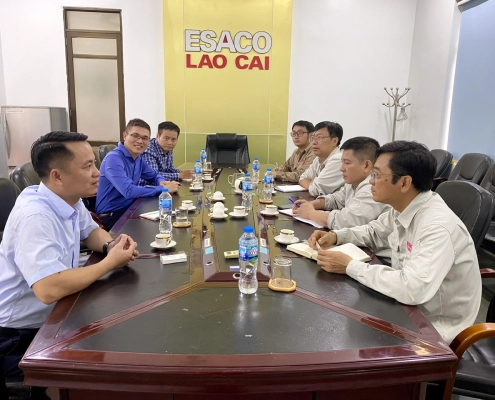
VNCPC conducts field survey at Tang Loong industrial park (Lao Cai)

From October 14-16, a working delegation from the Vietnam Cleaner Production Centre Co.Ltd. (VNCPC) and Green Ventures Vietnam Joint Stock Company coordinated with the Management Board of Lao Cai Economic Zone to conduct a field survey at Tang Loong industrial park (IP).

This activity is part of the project “Transforming Tang Loong IP into an Eco-IP.”

Tang Loong IP covers more than 1,100 hectares and hosts a large number of enterprises operating in industrial production, fertilizer, and chemical sectors. It is considered one of the key industrial hubs in northern Vietnam.

During the mission, the delegation carried out:

  • Surveys of production lines, energy and water use systems, and the consumption of raw materials, fuels, and chemicals;
  • Assessments of the current wastewater, exhaust gas and solid waste treatment systems of enterprises within the industrial park;
  • Collection and analysis of data to identify opportunities for cleaner production, resource efficiency, and the development of industrial symbiosis networks among enterprises.

The survey aims to support enterprises in Tang Loong IP in:

  • Identifying cost-saving opportunities;
  • Reducing emissions and reusing by-products;
  • Enhancing cooperation in by-product utilization through industrial symbiosis models.

This is an important step towards transforming Tang Loong IP into the first eco-industrial park in Lao Cai province, contributing to the province’s goals for sustainable development and a circular economy.

Some photos from the field survey at Tang Loong IP:

VNCPC

VNCPC coordinated with the MOIT to organize a training course on sustainable consumption and production

During 2 days (September 21-22, 2023), in Hanoi, the Energy Efficiency and Sustainable Development Department (Ministry of Industry and Trade – MOIT) coordinated with Vietnam Cleaner Production Centre Co. Ltd, (VNCPC) organize basic training courses on sustainable consumption and production (SCP) for officials from the Department of Industry and Trade, Industrial Development Consulting and Industry Promotion Centre of provinces and cities, and individuals, units and organizations operating in the SCP field.

The training course had more than 40 delegates representing Departments of Industry and Trade, Industrial Development Consulting and Industry Promotion Center, consulting units and related units, from more than 20 Northern and North Central provinces.

Speaking at the opening ceremony, Mr. Cu Huy Quang, Deputy Chief of the Energy Efficiency and Sustainable Development Department emphasized: In addition to training basic knowledge, skills, and solutions to contribute to promoting SCP, the training course also contributes to establish a network of experts in SCP in the Northern and North Central regions to jointly support businesses to transform faster.

Mr. Cu Huy Quang, Deputy Chief of the Energy Efficiency and Sustainable Development Department emphasized the role of the training course.

Accordingly, the content of the training course focused on main contents including: Sustainable Production topic with a focus on: Economical and efficient use of Energy, water, materials, Use of chemicals safety and efficiency, Instructions for using calculation tools in energy audits…, Circular economy; Topic: Sustainable Resource Management; The topic of Sustainable Distribution and the topic of Sustainable Consumption, with presentations by experts from Hanoi University of Science and Technology, National Economics University and senior experts from VNCPC.

In addition to the above content, the training course is also designed with games, interactive exercises, and knowledge synthesis to increase attraction for students. The course has also received high appreciation from students.

Mr. Le Xuan Thinh, Director of VNCPC spoke at the training session.

Mr. Le Xuan Thinh – Director of VNCPC said: The 2-day training program in the North is the first training course to be held in 2023. Following this program, training courses will be conducted in Central region and Southern region in October and November.

After participating in the training course, delegates will receive a certificate from the Department of Energy Conservation and Sustainable Development. This is also the premise for the Ministry of Industry and Trade to build and expand a network of sustainable production and consumption across the country.

Some pictures of the training course:

VNCPC